Quick Answer
The right pillow is the one that keeps your neck in a neutral position for your usual sleep posture. Side sleepers usually need a thicker pillow that fills the space between the ear and shoulder. Back sleepers often do best with medium support that keeps the chin from tipping too far up or down. Stomach sleepers usually need the thinnest pillow possible because that position tends to rotate and extend the neck for long periods of time.
Who This Is For
This guide is for people in Katy and the surrounding area who wake up with neck tightness, feel shoulder tension after sleeping, deal with morning headaches, or keep buying pillows that feel good for a few nights and then stop helping. It is also helpful for desk workers, side sleepers, active adults, parents, and anyone trying to improve sleep posture without guessing.
Why Your Pillow Matters for Neck Pain
Your neck has a natural curve, and that curve needs support while you sleep. When a pillow is too tall, your head may be pushed upward. When a pillow is too flat, your head may drop downward. Either direction can place extra stress on the joints, muscles, and soft tissues of the neck and upper back.
A supportive pillow does not force your body into one rigid position. Instead, it helps your head and neck rest in a position that feels balanced. The goal is simple: your nose, chin, neck, and chest should not feel twisted, jammed, or pulled while you are lying down.
Signs Your Pillow May Not Be Working for You
Your body often gives clues when your pillow is not the right fit. One uncomfortable night does not always mean you need a new pillow, but repeated patterns are worth paying attention to.
- You regularly wake up with neck stiffness or soreness.
- You feel tension at the base of your skull or across the tops of your shoulders.
- You wake up with headaches that improve as the day goes on.
- You fold, stack, or constantly adjust your pillow to get comfortable.
- Your pillow feels lumpy, flattened, or no longer holds its shape.
- Your chin feels tucked too far toward your chest when lying on your back.
- Your head feels like it drops toward the mattress when lying on your side.
Start With Your Sleep Position
The best pillow for neck support depends heavily on how you sleep most of the night. A pillow that works well for a side sleeper may be too tall for a back sleeper. A pillow that feels soft and cozy at first may not provide enough structure to keep the neck supported through the night.
Best Pillow Support for Side Sleepers
Side sleepers usually need the most pillow height because the pillow has to fill the space between the outside of the shoulder and the side of the head. If that space is not supported, the head can tilt downward toward the mattress. If the pillow is too tall, the head can tilt upward away from the mattress.
A helpful side-sleeping test is to lie on your side and imagine a straight line running from the center of your face through the center of your chest. Your head should not look like it is bending up or falling down. Many side sleepers do well with a firmer pillow, a contoured pillow, or an adjustable-fill pillow that can be customized. I tend to recommend the Core Products Tri-Core Cervical Support Pillow – Gentle (Medium Firmness).
Best Pillow Support for Back Sleepers
Back sleepers typically need moderate support. The pillow should support the natural curve of the neck without pushing the head too far forward. If your chin is angled toward your chest, the pillow may be too high. If your head falls backward and your throat feels stretched, it may be too low.
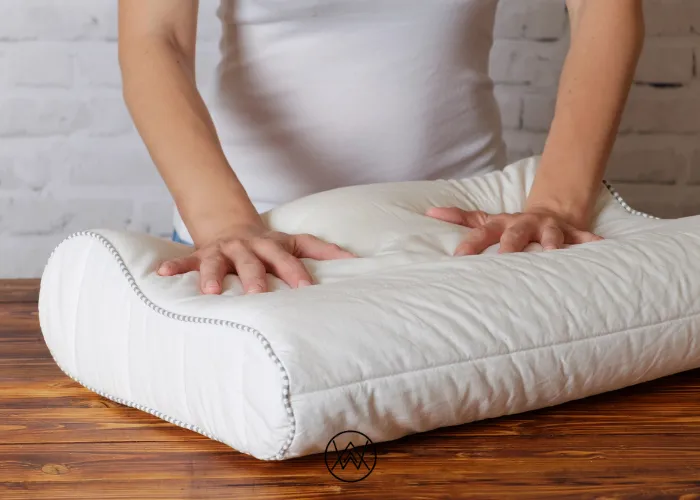
Some back sleepers like a pillow with a small cervical contour that supports the neck while allowing the head to rest comfortably. The key is comfort plus alignment, not simply choosing the firmest option available. I tend to recommend the Core Products Tri-Core Cervical Support Pillow – Gentle (Medium Firmness).
Best Pillow Support for Stomach Sleepers
Stomach sleeping is often the hardest position on the neck because the head has to rotate to one side for breathing. That prolonged rotation can irritate the neck and upper back, especially for people who already deal with stiffness or headaches.
If you sleep on your stomach, a very thin pillow is usually better than a thick one. Some people do better with no pillow under the head and a small pillow under the chest or pelvis to reduce strain. If stomach sleeping is connected to recurring neck pain, gradually training yourself toward side or back sleeping may be helpful. I recommend the Ostrich Pillow Bed Pillow.
Choose the Right Pillow Material
Pillow material affects comfort, support, temperature, and how long the pillow keeps its shape. There is no one perfect material for everyone, but each option has pros and cons.
- Memory foam: Often provides contouring support and can work well for people who need structure. Some memory foam pillows retain heat or feel too firm for certain sleepers.
- Latex: Usually more responsive and buoyant than memory foam. It can offer good support without the slow sinking feeling.
- Adjustable fill: A strong option for many people because you can add or remove material until the height feels right.
- Down or down alternative: Soft and comfortable, but may compress too much for people who need stronger neck support.
- Contoured cervical pillows: Designed to support the neck curve. These can help some people, but the shape must match your body and sleep position.
How to Test a Pillow at Home
Instead of judging a pillow only by how it feels in your hand, test how your body rests on it. Give yourself a few minutes in your normal sleep position and notice what your neck does.
- Lie in your usual sleep position and check whether your neck feels neutral, not bent or twisted.
- Notice whether your shoulders can relax instead of creeping up toward your ears.
- Check whether you can breathe comfortably without your chin being forced toward your chest.
- Give a new pillow several nights when possible, unless it clearly increases pain.
- Use the pillow with your normal mattress, because mattress firmness changes how much pillow height you need.
Common Pillow Mistakes
Many people choose pillows based on softness alone. Comfort matters, but softness without support can leave the neck unsupported. On the other hand, choosing an extremely firm pillow because it seems more “orthopedic” can create pressure points and discomfort.
- Stacking multiple pillows: This often pushes the head too far forward, especially for back sleepers.
- Keeping an old pillow too long: A flattened pillow may no longer support the neck properly.
- Ignoring mattress firmness: A softer mattress lets the shoulder sink more, which can change the pillow height needed.
- Buying by label only: “Cervical,” “orthopedic,” or “ergonomic” does not automatically mean it fits your body.
When Should You Replace Your Pillow?
A pillow should be replaced when it no longer supports your neck, stays compressed, develops lumps, or causes you to constantly readjust during the night. Some pillows last longer than others, but your body’s feedback matters more than the date on the tag.
A simple test is to place the pillow on a flat surface and look at whether it still holds its shape. If it folds, collapses, or stays dented, it may not be giving you the support you need.
When Neck Pain Is More Than a Pillow Problem
Pillow support matters, but it is only one part of the bigger picture. Recurring neck pain can also be influenced by posture, work setup, stress, previous injuries, spinal joint motion, muscle tension, and how your nervous system is adapting to daily strain.
If you have tried changing pillows and still wake up with stiffness, headaches, or shoulder tension, it may be time for a more complete evaluation. At Aware Chiropractic, we look beyond temporary comfort and assess what may be contributing to recurring pain patterns.
Frequently Asked Questions
What pillow is best for neck pain?
The best pillow for neck pain is usually one that keeps your neck supported in a neutral position based on your sleep position. Side sleepers often need a thicker pillow, back sleepers usually need medium support, and stomach sleepers often need a very thin pillow or a different sleep position.
Can the wrong pillow cause headaches or shoulder pain?
A pillow that is too high, too low, too firm, or too flat can place extra stress on the neck and upper back. For some people, that can contribute to morning stiffness, tension headaches, or shoulder discomfort. Persistent symptoms should be evaluated by a qualified healthcare provider.
Is a firm pillow always better for neck support?
Not always. A pillow should be supportive enough to maintain alignment, but comfortable enough that your muscles can relax. Too firm can create pressure. Too soft can collapse. The best choice depends on your sleep position, shoulder width, mattress, and comfort preference.
Should I use a cervical pillow?
A cervical pillow can be helpful for some people, especially back sleepers who need support under the neck curve. However, the shape and height have to match your body. If a cervical pillow increases discomfort, it may not be the right fit.
Still Waking Up With Neck Pain?
If changing your pillow has not solved recurring neck stiffness, headaches, or shoulder tension, a chiropractic assessment can help identify what may be contributing to the problem. Schedule a visit with Aware Chiropractic in Katy, TX and get clear next steps for your neck health.
Book Now